
Meta Information
- Title: How To Measure Explosive Power For Sports
- Meta Description: Learn how to measure explosive power effectively for sports performance. Discover key tests, tools, and tips to evaluate and enhance athletic explosiveness.
- Focus Keyword: measure explosive power
- URL Slug: how-to-measure-explosive-power-for-sports
Introduction
Explosive power is a vital component of athletic performance, influencing an athlete’s ability to jump higher, sprint faster, and change direction efficiently. In sports like basketball, football, and track and field, power measurement helps athletes identify strengths, weaknesses, and progress.
This guide explores how to measure explosive power for sports, including the best tests, methods, and ways to interpret results for performance improvement.
What Is Explosive Power?

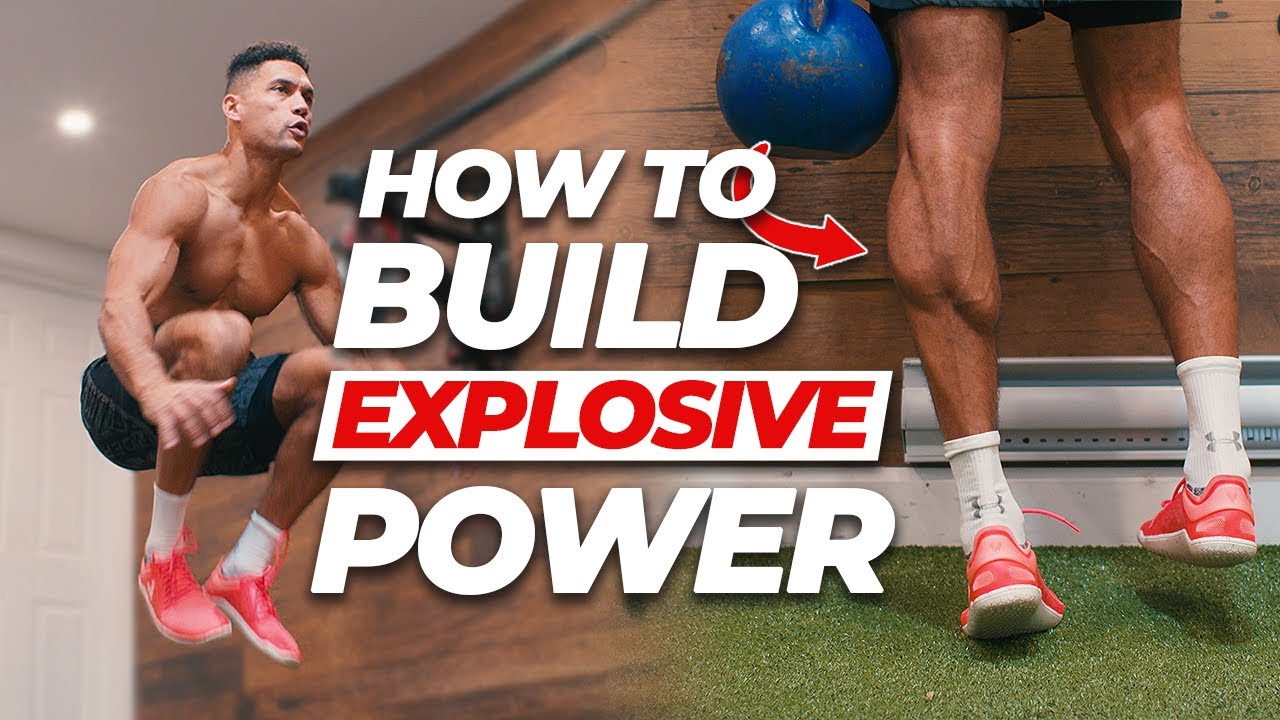
Explosive power combines strength and speed, reflecting how quickly an athlete can generate force. It’s essential in movements that require rapid acceleration, jumping, or throwing. Measuring explosive power allows coaches and athletes to track development and design targeted training programs.
Common Methods To Measure Explosive Power
1. Vertical Jump Test
Purpose: Measures lower-body explosive power.
How It Works:
- The athlete stands beside a wall or under a device such as a Vertec.
- They jump as high as possible using a countermovement.
- The difference between the standing reach and jump height gives the vertical jump score.
Tools: Vertec, force plates, or mobile apps like MyJump2.
📖 Related Read: How To Perform A Functional Movement Screen (FMS)
2. Standing Broad Jump Test
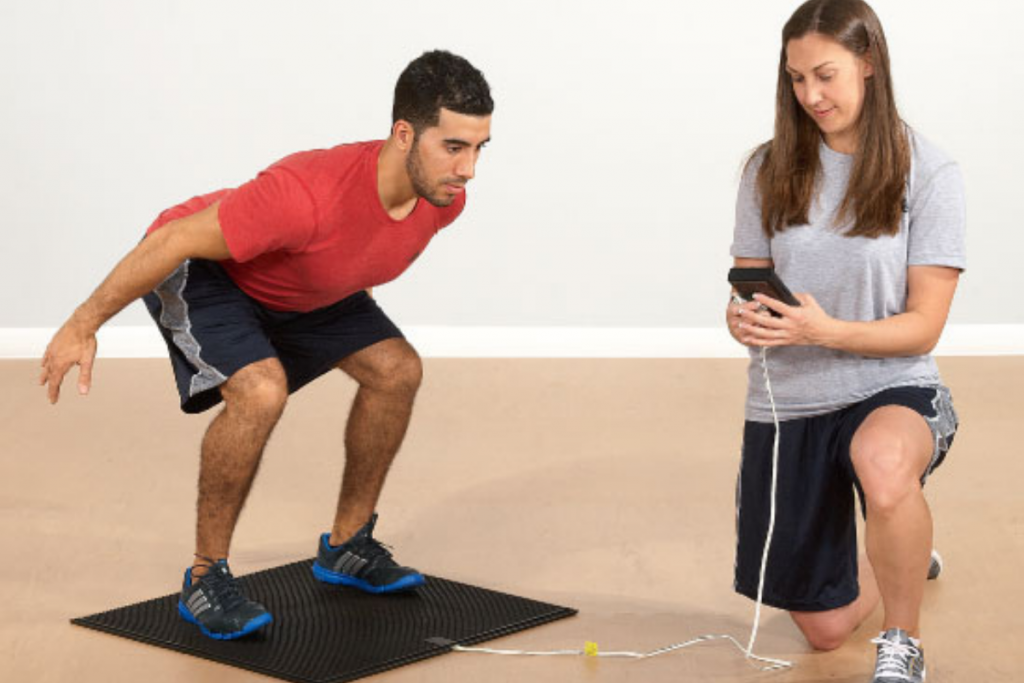
Purpose: Evaluates horizontal power output from the lower body.
How It Works:
- The athlete stands with feet shoulder-width apart and jumps forward as far as possible.
- Measure the distance from the starting line to the back of the heels.
Tip: Keep consistent technique for accurate comparisons over time.
📌 Related Topic: Understanding Body Composition: Beyond Weight and BMI
3. Medicine Ball Throw Test
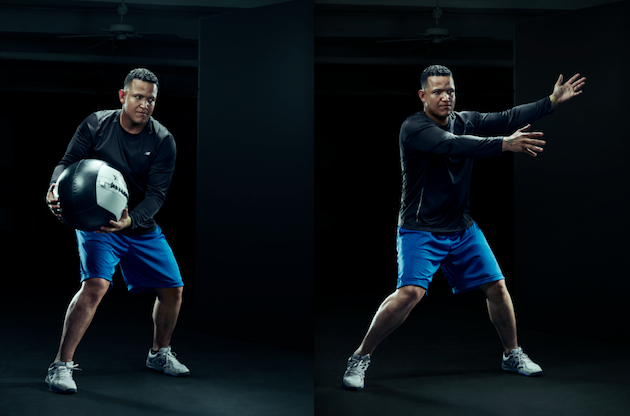
Purpose: Tests upper-body explosive power.
How It Works:
- Using a medicine ball (2–5 kg), the athlete sits or stands and throws it forward or overhead.
- The distance thrown represents upper-body explosiveness.
Applications: Useful for athletes in sports like boxing, basketball, and volleyball.
📖 Internal Link: Power Output Testing: What It Is And Why It Matters
https://www.topendsports.com/testing/tests/sprint.htm4. Sprint Test (10m–40m)
Purpose: Measures acceleration and speed power.
How It Works:
- Use timing gates to record sprint times over short distances.
- Compare acceleration phases to assess lower-body explosiveness.
Pro Tip: Pair with strength training and plyometrics for improvements.
📎 Internal Link: Speed and Agility Tests for Competitive Athletes
5. Force Plate Analysis
Purpose: Provides the most detailed measurement of power output.
How It Works:
- The athlete performs a jump or lift on a force plate.
- The plate records ground reaction forces and calculates power metrics.
Advantage: Offers data on rate of force development (RFD), peak power, and symmetry.
Why Measuring Explosive Power Matters
- Improves performance tracking: Regular assessments highlight training progress.
- Prevents injuries: Detects muscular imbalances early.
- Optimizes training: Helps personalize strength and conditioning programs.
How To Improve Explosive Power
- Incorporate Plyometric Training: Box jumps, jump squats, and bounding drills.
- Use Olympic Lifts: Exercises like cleans and snatches build strength-speed power.
- Track Progress: Record data every 4–6 weeks.
📖 Internal Resource: How To Use Heart Rate Variability (HRV) To Improve Recovery
FAQs
Q1: What is the best test for measuring explosive power?
A: The vertical jump test is the most commonly used and reliable method for assessing lower-body explosive power.
Q2: How often should athletes test explosive power?
A: Ideally every 4–8 weeks to monitor progress and adjust training loads.
Q3: Can explosive power be improved at any age?
A: Yes, through structured strength and plyometric training, athletes of all ages can enhance power output.
Conclusion
Measuring explosive power is essential for athletes aiming to excel in high-intensity sports. By combining objective tests like the vertical jump, sprint, and medicine ball throw, athletes can gain valuable insights into performance and progression.
Integrating these measurements with consistent training and recovery strategies ensures long-term athletic development and peak performance.
Internal Links
- Power Output Testing: What It Is And Why It Matters
- Speed And Agility Tests For Competitive Athletes
- Understanding Body Composition: Beyond Weight And BMI
- How To Use Heart Rate Variability (HRV) To Improve Recovery
About the Author