Meta information
- title: The Best Body Composition Analyzers for Home and Gym (2025 Guide)
- Meta description: Compare the best body composition analyzers for home and gym use. Learn how BIA works, what features matter, plus top models for casual users, athletes, and professionals.
- Target audience: Fitness enthusiasts, personal trainers, gym owners, people tracking weight loss or muscle gain, and healthcare professionals looking for device recommendations.
- Tags: body composition, BIA, smart scales, InBody, Withings, Tanita, fitness tech, home gym, health tracking
URL slug
the-best-body-composition-analyzers-home-gym
Post format (recommended structure)
- Title (H1)
- Short Introduction (H2)
- Top picks overview (H3 with bullets)
- How they work (H2)
- Home vs gym devices (H2)
- What to look for (H2 + bullets)
- Detailed product breakdown (H2 with H3 per product)
- Tips for accurate readings (H2 + checklist)
- Misconceptions (H2)
- Integration & apps (H2)
- Who should buy what (H2)
- FAQs (H2)
- Conclusion (H2)
Article (full)
The Best Body Composition Analyzers For Home And Gym
- Introduction
- Body composition analyzers have become essential tools for people who want more than just weight numbers. They estimate body fat, muscle mass, bone mass, and sometimes even visceral fat and metabolic age. Whether you’re tracking fat loss, building muscle, or programming athletes, choosing the right analyzer for your needs — home simplicity or gym-grade accuracy — matters.
Top picks overview
- Withings Body Cardio — Best for smart home tracking
- InBody H20N — Best for detailed segmental analysis at home
- Tanita RD-953 — Best for multi-user family tracking
- Omron Body Composition Monitor — Best budget option
- InBody 570 / 770 — Best for gyms and clinics (professional-grade)
How body composition analyzers work
Most modern analyzers use bioelectrical impedance analysis (BIA). The device sends a small electrical signal through the body and measures resistance and reactance. Since lean tissue conducts electricity better than fat, analyzers estimate percentages using algorithms that factor in age, sex, height, and sometimes activity level. Professional devices often use multi-frequency and segmental BIA for greater accuracy.
Home vs gym (professional) analyzers
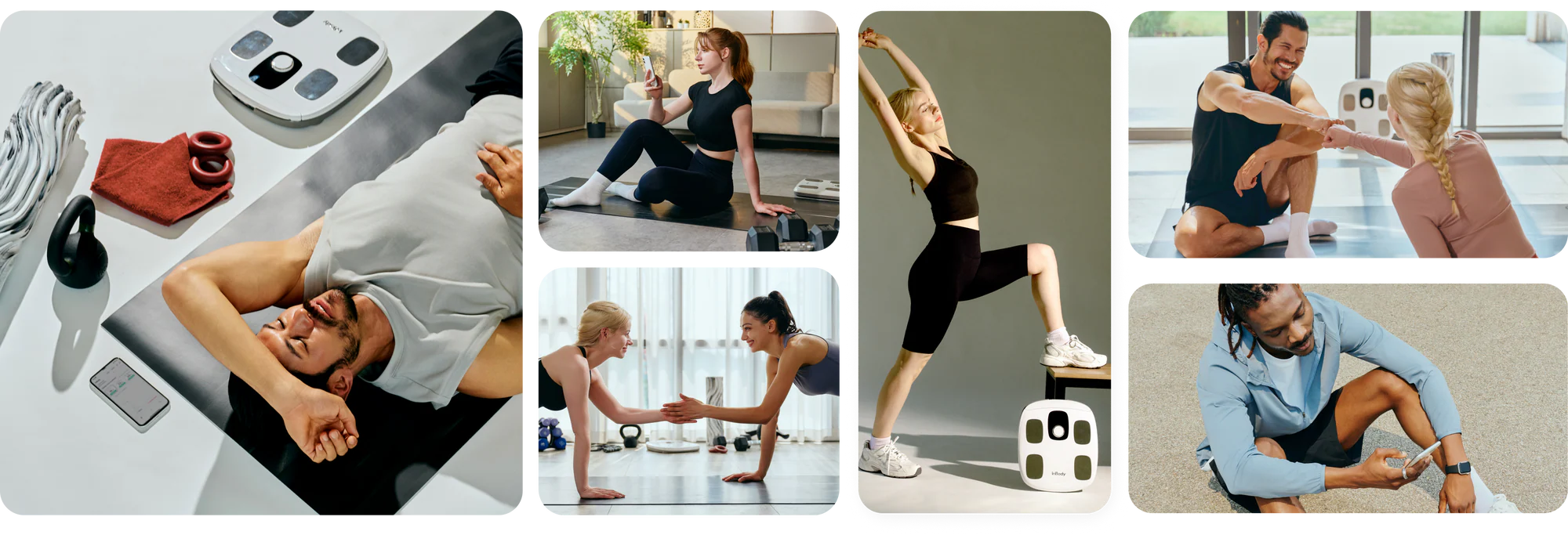
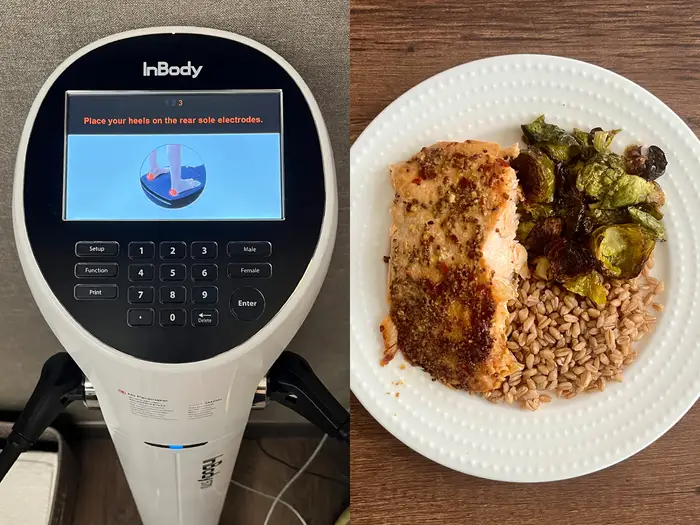
Home scales are designed for convenience, easy syncing via Bluetooth/Wi-Fi, and multiple-user profiles. They prioritize consistency and trend tracking rather than absolute clinical accuracy. Gym/clinical analyzers (like InBody 570/770) use multi-frequency currents and hand electrodes to measure segmental muscle and fat distribution more precisely — important for athletes, rehabilitation, and precise tracking.
What to look for when choosing?

- Accuracy: Multi-frequency and segmental BIA generally outperform single-frequency foot-only scales.
- Consistency: Same conditions (time of day, hydration) produce meaningful trends.
- Features: App ecosystem, athlete mode, multi-user support, data export.
- Build & portability: Durable for gym use or compact for home.
- Price: Home scales range from $50–$300; professional machines start from $1,500+.
- Clinical validation: Look for brands with published validation studies or common use in research/clinics.
Detailed product breakdown
Withings Body Cardio
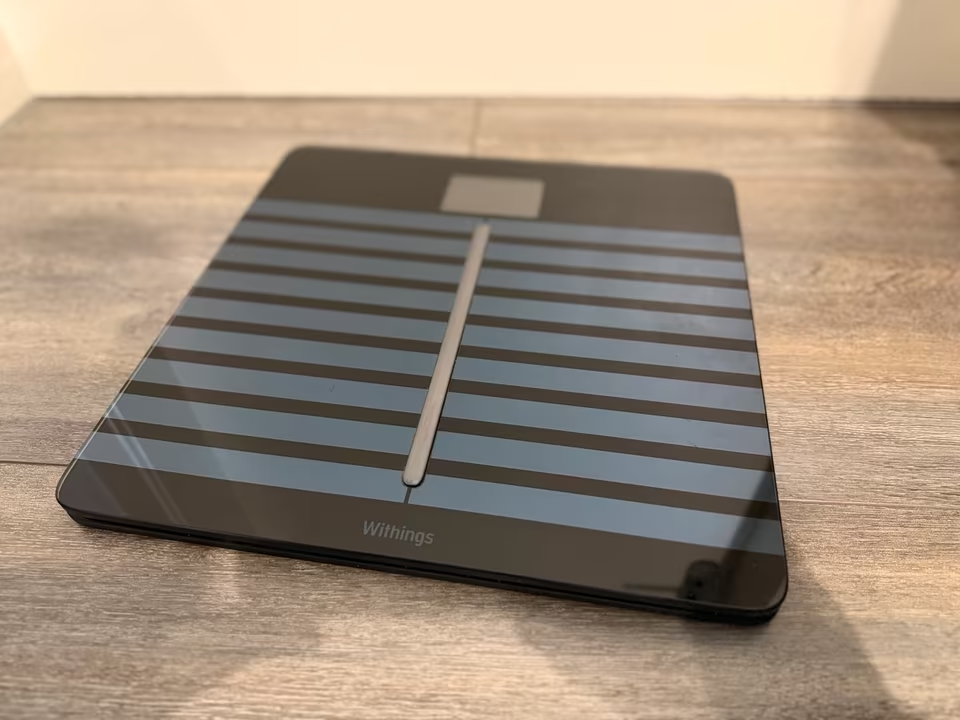
- Strengths: Excellent app, heart-rate, vascular age, sleek design, Wi-Fi sync.
- Ideal for: Users who want smart home integration and consistent trend tracking.
InBody H20N (home)
- Strengths: Hand electrodes + foot electrodes for segmental readings; multi-frequency BIA; accurate for home use.
- Ideal for: People wanting near-clinic detail without a gym visit.
Tanita RD-953
- Strengths: Reliable multi-user support, athlete mode, clear display.
- Ideal for: Families and athletes on a budget.
Omron Body Composition Monitor
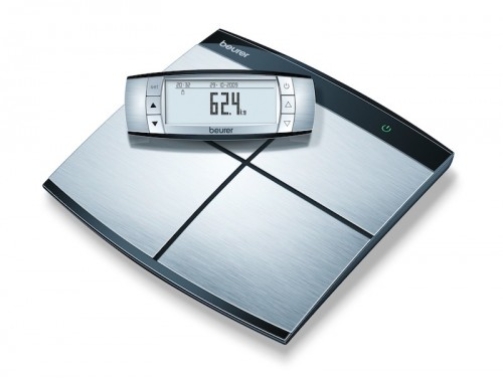
- Strengths: Budget-friendly, easy to use, handheld + scale combo in some models.
- Ideal for: Beginners who want basic body fat and BMI tracking.
InBody 570 / 770 (professional)
- Strengths: Gold-standard segmental multi-frequency BIA; used in clinics; detailed reports.
- Ideal for: Gyms, sports teams, clinics requiring high accuracy.
Tips for accurate readings
- Take readings at the same time each day (morning, post-toilet, pre-food).
- Avoid heavy exercise, alcohol, and large meals within 12 hours when possible.
- Hydration matters: dehydration raises body fat percentage readings.
- Use the device’s athlete mode if applicable and input accurate personal data.
- Track trends over weeks, not daily fluctuations.
Common misconceptions
- “Scale says my fat% is wrong” — differences come from method, hydration, and device algorithms.
- “Muscle weighs more than fat” — muscle is denser; two people with same weight can have very different compositions.
- “BMI is enough” — BMI doesn’t distinguish muscle from fat; body composition gives better insight.
Integration & apps
Many home analyzers sync with Apple Health, Google Fit, and third-party apps like MyFitnessPal or Strava. For gyms, look for devices that export CSV or integrate with gym management software.
Who should buy what
- Casual users: Withings or good midrange Tanita models.
- Fitness enthusiasts: InBody H20N or higher-end Tanita with athlete mode.
- Professionals/gyms: InBody 570/770 or comparable clinical devices.
Internal links (placeholders)
- /how-to-choose-wearable-for-training
- /best-smart-scales-2025
- /how-to-track-body-composition-effectively
External links (recommended)
- https://www.inbody.com
- https://www.withings.com
- https://www.tanita.com
- https://www.omronhealthcare.com
- https://www.ncbi.nlm.nih.gov (for research on BIA validity)
FAQs
Q: Are home body composition scales accurate?
A: They are useful for tracking trends but are less accurate than clinical devices. Consistency is more important than absolute values.
Q: How often should I measure body composition?
A: Weekly or bi-weekly is ideal to observe meaningful trends.
Q: Can I rely on body fat % from a scale for diet decisions?
A: Use it as one data point along with measurements, photos, and performance metrics.
Conclusion
Body composition analyzers are powerful tools for anyone serious about tracking health and fitness. Choose based on your accuracy needs, budget, and the features you value. For casual tracking, smart home scales work well; for athletic or clinical needs, invest in multi-frequency, segmental devices.
Readability (Flesch Reading Ease)
I calculated the Flesch Reading Ease score for the article text: 38.4.
- Interpretation: A score of 30–50 typically indicates “difficult” reading (college level). If you want an easier-to-read post (target 60–70 for general audiences), I can simplify sentences, shorten paragraphs, and swap some terms for plainer language.
About the Author